Classes and seminars on AI, data, and the tools I actually use — small rooms, real participation. Mostly in person in Hong Kong; sometimes online, occasionally further afield.

Nothing is open for registration today — the next class is taking shape. Leave your email and you'll hear the moment it opens, before anyone else.
One email when a class opens. Nothing else. Members hear first automatically.
What makes Horris stand out is not simply that he “explains things clearly.” He is not the kind of instructor who only teaches a sequence of steps. He is an industry expert with many years of hands-on experience, and that depth comes through clearly in his teaching.
First, Horris brings a strong depth of professional knowledge. Rather than simply following a textbook or repeating the course material, he genuinely understands the logic, principles, limitations and practical applications behind the subject. As a result, his teaching never remains at the surface: it is substantive, well-founded and credible. Second, he can make complex concepts easy to understand without oversimplifying them. Some experts may have extensive experience but struggle to explain things in a way that students can readily follow. Conversely, some instructors may explain things well but lack the practical experience to support what they teach. What is unusual about Horris is that he possesses both qualities. He can break down difficult ideas using simple, relatable examples and metaphors while keeping the content accurate and rigorous. Third, he does not merely teach students what to do; he helps them understand why they are doing it. Many courses teach you to complete a task by following a series of steps, but you may finish without truly understanding the reasoning behind them. Horris teaches differently. He explains the underlying logic so that students can develop a genuine foundation instead of simply memorising a set of procedures. Fourth, he is highly skilled at addressing questions from students with different backgrounds. A class may include students with limited prior knowledge as well as those who already understand the subject to some extent. Horris can quickly identify what a student is actually struggling with and respond in a clear, direct and appropriate way. His answers do more than address the question at the surface: he helps students connect it to the wider concept and develop a more complete understanding. Fifth, his courses connect knowledge with practical application. Drawing on his many years of industry experience, he goes beyond theory and helps students understand how the knowledge is used in real situations, when it is applicable, and why it matters. This makes his courses practical and comprehensive—and distinguishes them from courses that teach procedures without developing a deeper understanding. Overall, I would describe Horris as a rare combination: he has the depth of an industry expert as well as a strong ability to teach and communicate. His greatest value lies not only in making difficult material easier to understand, but in drawing on genuine depth of knowledge to help students build a clear and solid foundation. For anyone who wants to understand a subject properly, rather than merely learning how to perform a few tasks at the surface level, Horris’s courses are extremely valuable.
Excellent workshop that enable myself to turn ideas in my mind for years into actual tools, without the need of any developers or engineers! The workshop lays the foundation for plenty of future use cases too - recommended for everyone who is afraid of tech and taking their first step to create something on your own!
I really enjoyed the Vibe Coding course. I came in with lots of ideas but very little confidence that I could actually build them myself. The course changed that.
What I found most valuable was learning by actually building, rather than spending too much time on theory. By the end, I had built a working MVP and, more importantly, understood how to approach an idea: start small, define what you want it to do, build, test, and iterate. It made building with AI feel much more accessible to someone who isn't a traditional developer. I left the course not just with something I'd built, but with a long list of things I now want to try building next.
I gained a great deal from the course. Horris explained everything thoroughly and combined his teaching with live, hands-on exercises, making it easier to remember by learning and practising at the same time. By the end of the course, I was able to carry out the basic tasks independently. The course was highly practical and valuable, and I would recommend it.
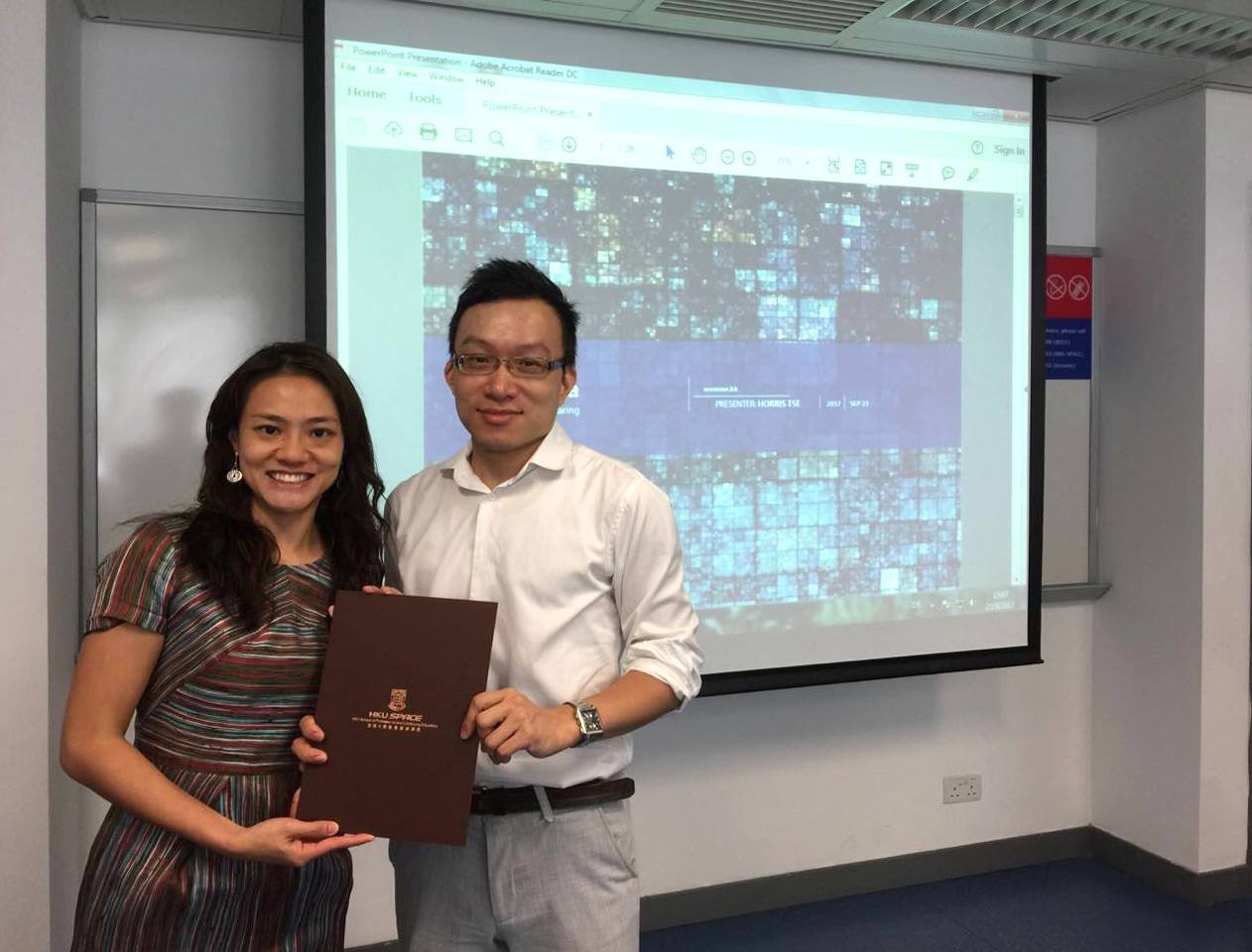
Some classrooms taught in, and discussions joined.

Finance · Technology · AI · Product · Communication
20+ years in programming & product development
Horris Tse works across finance, technology, AI, product and communication, with more than 20 years of experience in programming and product development.
From finance and business to building digital products, his work has consistently crossed disciplines. HtPi’s classes grow from that same practice.
Every class is designed by Horris Tse — the content, the pacing, and how the hands-on parts work. Most classes he teaches himself; some runs invite a guest instructor, or are co-taught.
A class starts with a question. It doesn't take many people — what matters is that everyone has room to ask, to try things, and to bring a different way of seeing.
A three-hour class, split evenly between 8 people: about 22.5 minutes each.
180 ÷ 8
I use Google analytics and ad-measurement cookies — on by default — to see what gets read and whether ads work. Decline removes them, leaving only cookie-free, non-identifying statistics. See the Privacy Policy. I use Google analytics and ad measurement. Cookies are set only if you accept — until then Google receives only cookie-free, non-identifying statistics. See the Privacy Policy.